Case Study
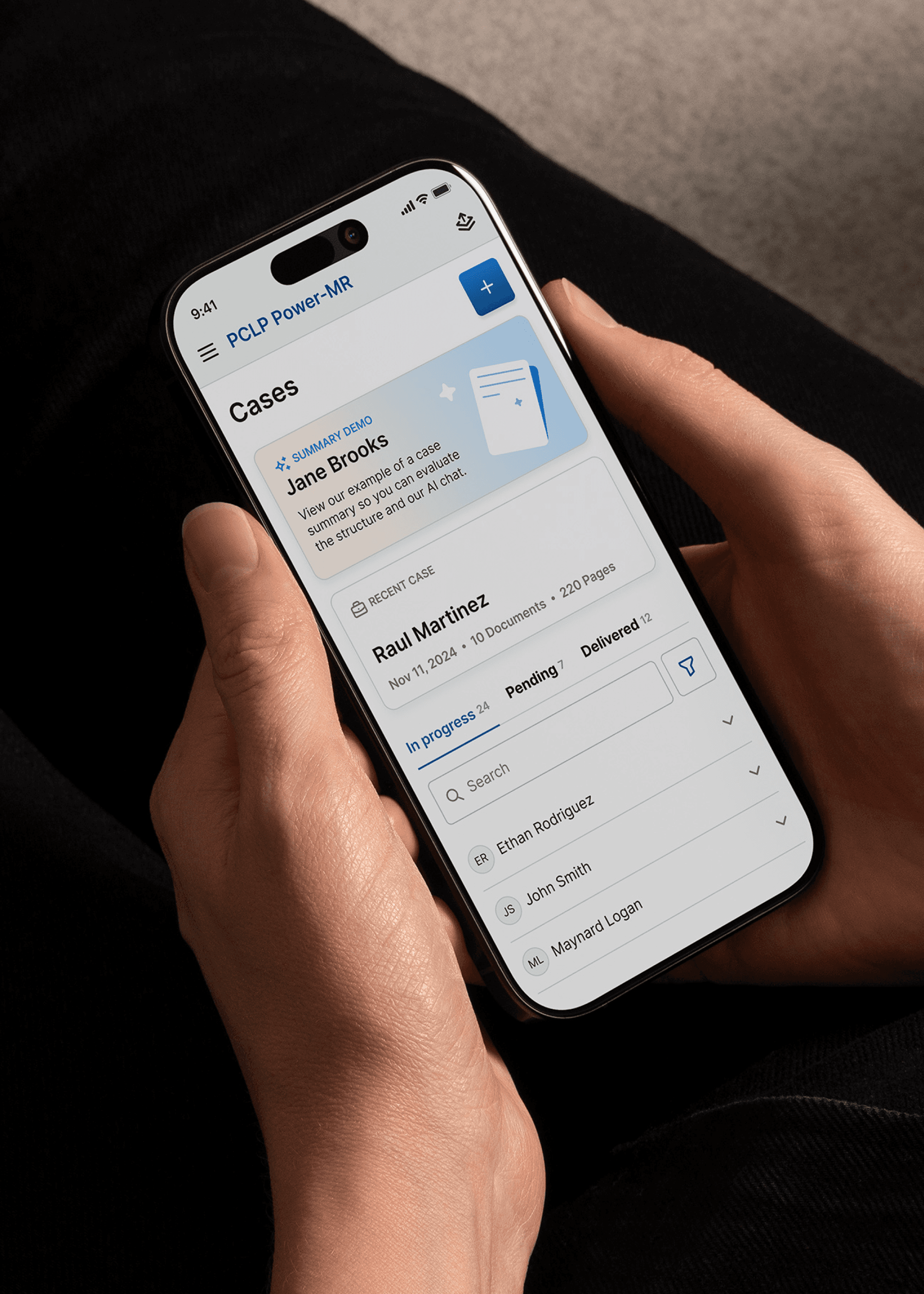
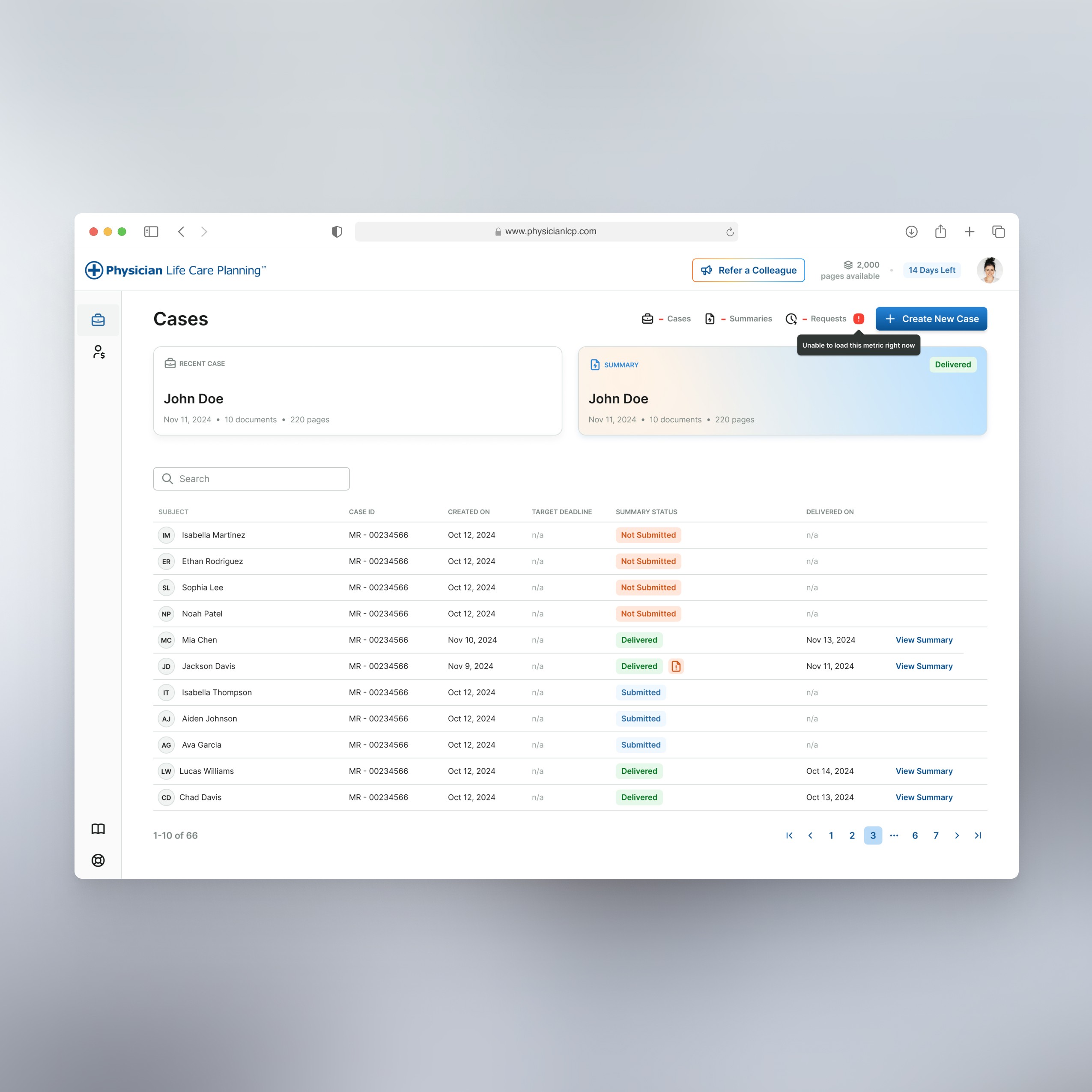
Roko Labs built Periscope, an AI insights platform for personal injury law firms, with Physician Life Care Planning over six months. The system combines OCR, ML, and large language models to turn thousands of pages of medical records into case-evaluation dashboards. Periscope IQ adds a natural language chatbot grounded in the underlying records.

Industry
Project Duration
The Challenge
While the goal was clear — faster insights, better decisions, and a scalable platform — the path wasn’t. Existing solutions lacked the flexibility, efficiency, and speed needed to meet PLCP’s commercial and strategic goals.
Despite investing in AI, progress slowed, iteration cycles grew longer, and the platform drifted from its original vision.
PLCP partnered with Roko Labs as a trusted advisor to evaluate and redesign the underlying AI and platform architecture to support sustainable growth.
The Vision
Physician Life Care Planning (PLCP) is a leader in life care planning and expert medical services for catastrophic personal injury litigation. They set out to launch Periscope, an AI-powered platform that helps personal injury lawyers quickly understand cases at a glance.
Their goal was to stand apart from traditional medical record summary providers by enabling legal teams to visualize, analyze, and reason through complex cases in minutes instead of hours.
The Approach
AI-Due Diligence
Roko Labs engaged as a trusted advisor to PLCP leadership and their PE stakeholders, applying our AI due diligence methodology to evaluate the platform from both a technical and operational perspective.
Rather than focusing narrowly on model performance, Roko assessed:
Architectural flexibility and long-term scalability
Operational efficiency across ingestion, processing, and delivery
Alignment between AI outputs and real user workflows
The platform’s ability to support roadmap velocity and margin expansion
This diligence revealed that the existing AI strategy was introducing friction at every layer, slowing development, limiting product evolution, and ultimately pulling the business further away from its intended vision and EBITDA targets.
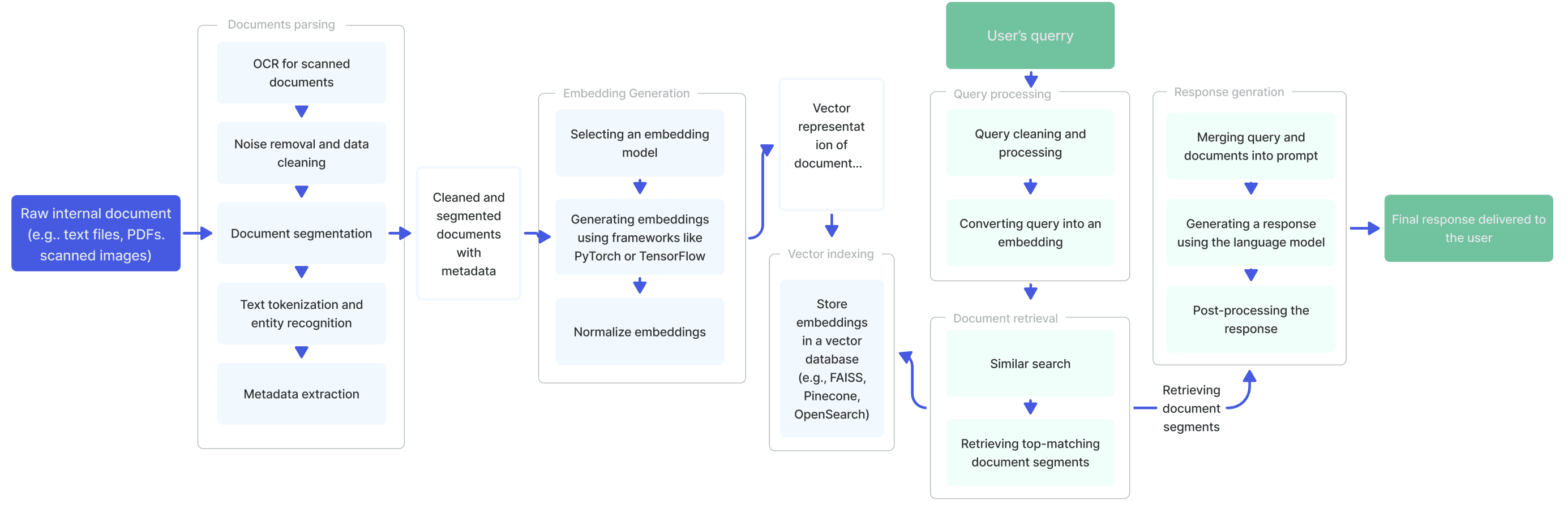
End-to-End Pipeline
Technical Architecture
Roko Labs designed and executed a surgical re-architecture of PLCP’s AI platform, aligning technology decisions directly with business outcomes. The result was a cloud-native, AI-driven system built for control, transparency, and rapid iteration, one that PLCP could evolve as the product vision expanded.
At the core is a Retrieval-Augmented Generation (RAG) architecture optimized specifically for medical–legal workflows:
Domain-aware ingestion that normalizes medical records across formats while preserving provenance and temporal accuracy
Intelligent document segmentation aligned to clinical events and legal relevance, rather than generic text chunks
Semantic retrieval designed to surface precise, source-linked evidence at query time
Controlled response generation that prioritizes traceability, accuracy, and professional-grade outputs
Owning the full AI pipeline - rather than relying on opaque vendor-managed workflows - gave PLCP the flexibility to evolve from static summaries into a dynamic case intelligence platform.
Have a similar task or project?
Let's talk about it!
Faster Case Evaluations
Periscope Dashboard
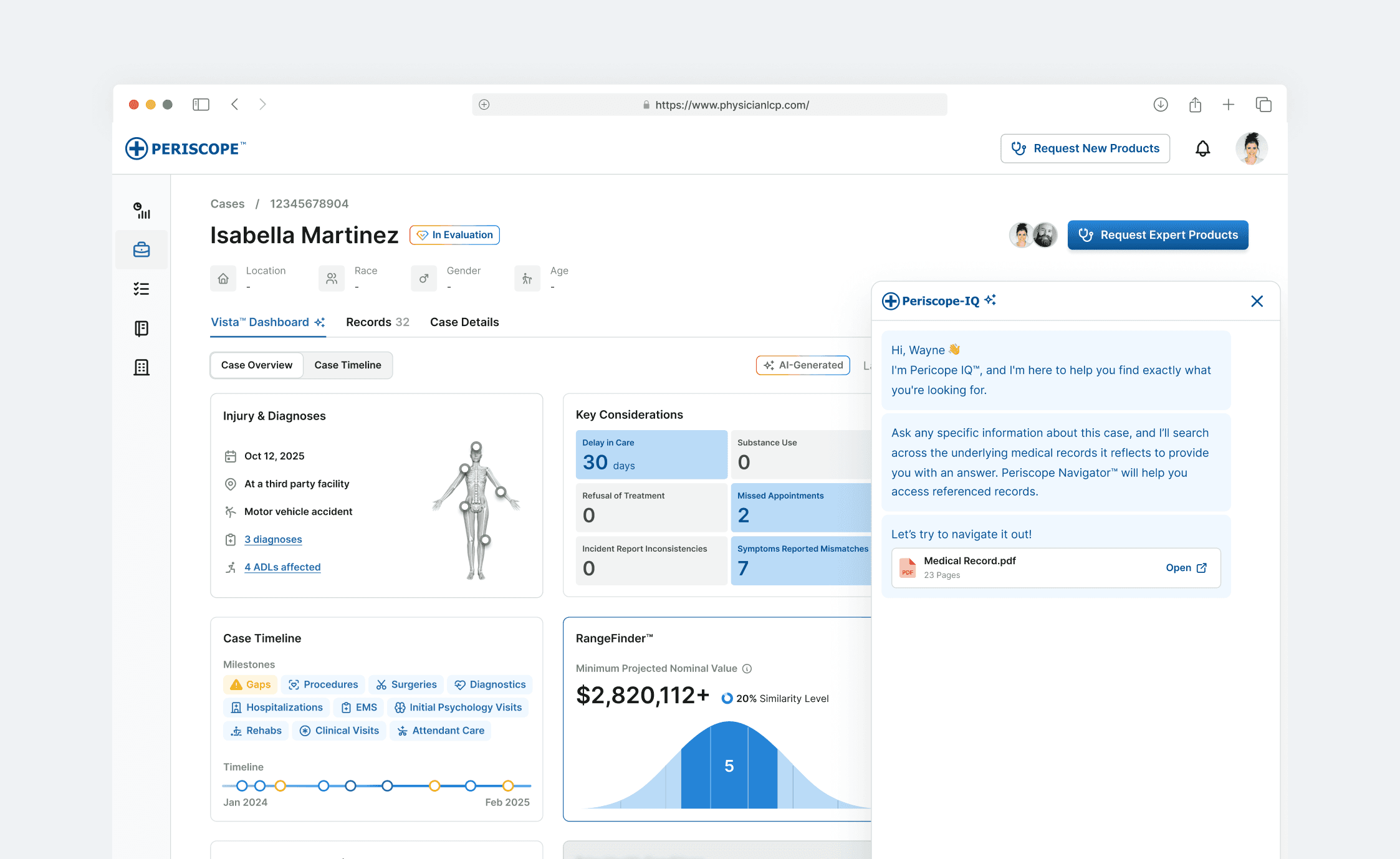
The Periscope dashboard provides a consolidated, structured representation of medically relevant information extracted from a case’s underlying records. Its primary purpose is to support personal injury attorneys and paralegals in evaluating new cases quickly, determining case viability, identifying potential risks, and understanding the overall treatment picture without manually reviewing every record.
Using a combination of OCR extraction, machine learning, and large language model–based analysis, the Dashboard organizes medical documentation into actionable insights presented across a series of modules. Each module focuses on a specific aspect of the case, with deeper drill-down views available for review when needed.
The Dashboard is designed to provide attorneys and paralegals with immediate clarity on the nature of the injury, treatment path, care utilization, key considerations, future care recommendations and other factors relevant to deciding whether to take a case and how to value it.
Example Module 1
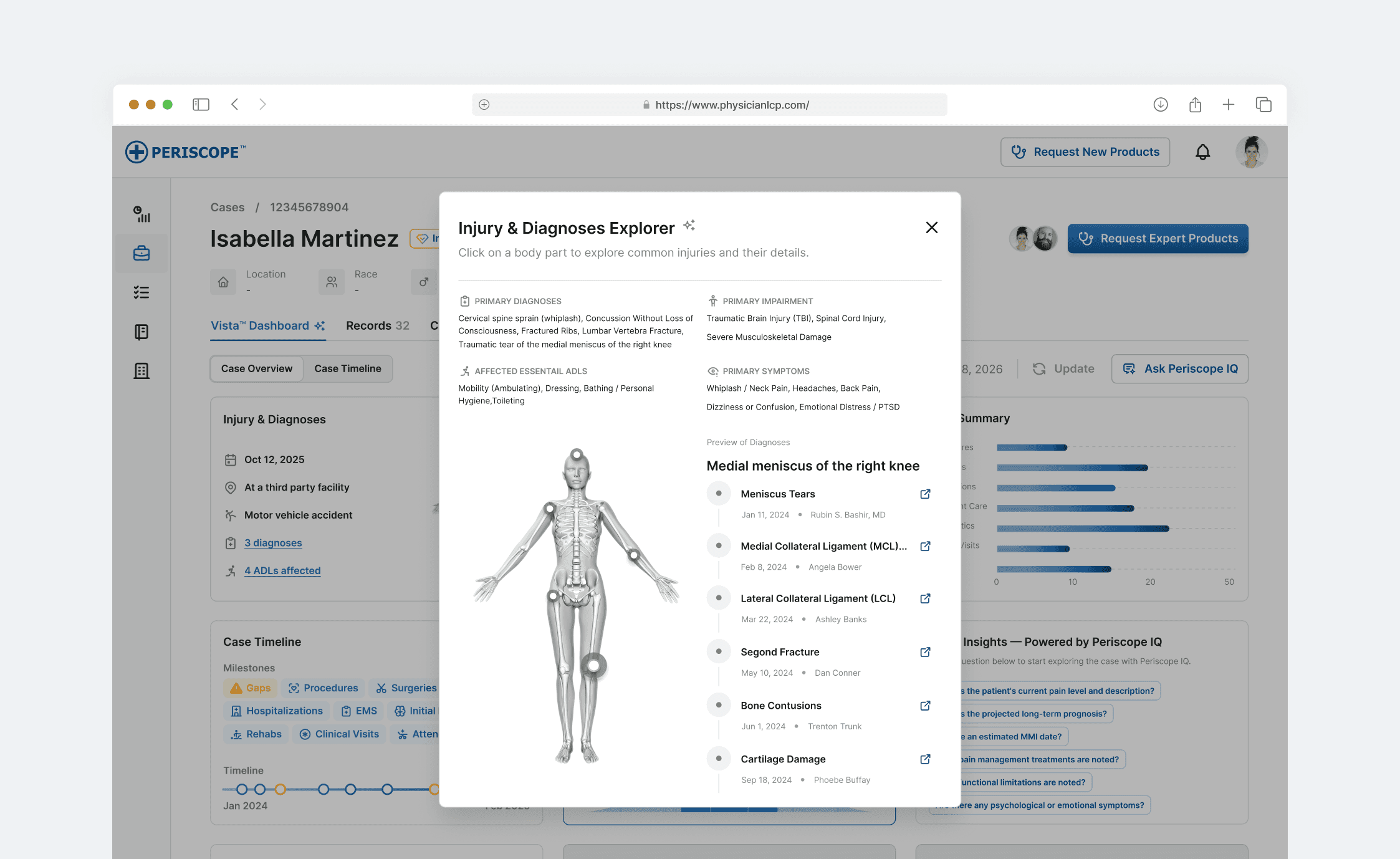
Injury and Diagnosis Explorer
Medical records often span thousands of pages and years of treatment. The Injury and Diagnosis Explorer automatically extracts and organizes injury- and diagnosis-related information across all records.
Instead of scanning summaries or raw documents, users can quickly see what conditions are present, when they appear, and how they evolve - all mapped to a body diagram. Users can then access source material via embedded links for detailed transparency and review.
This capability supports faster case understanding without sacrificing accuracy or trust.
Example Module 2
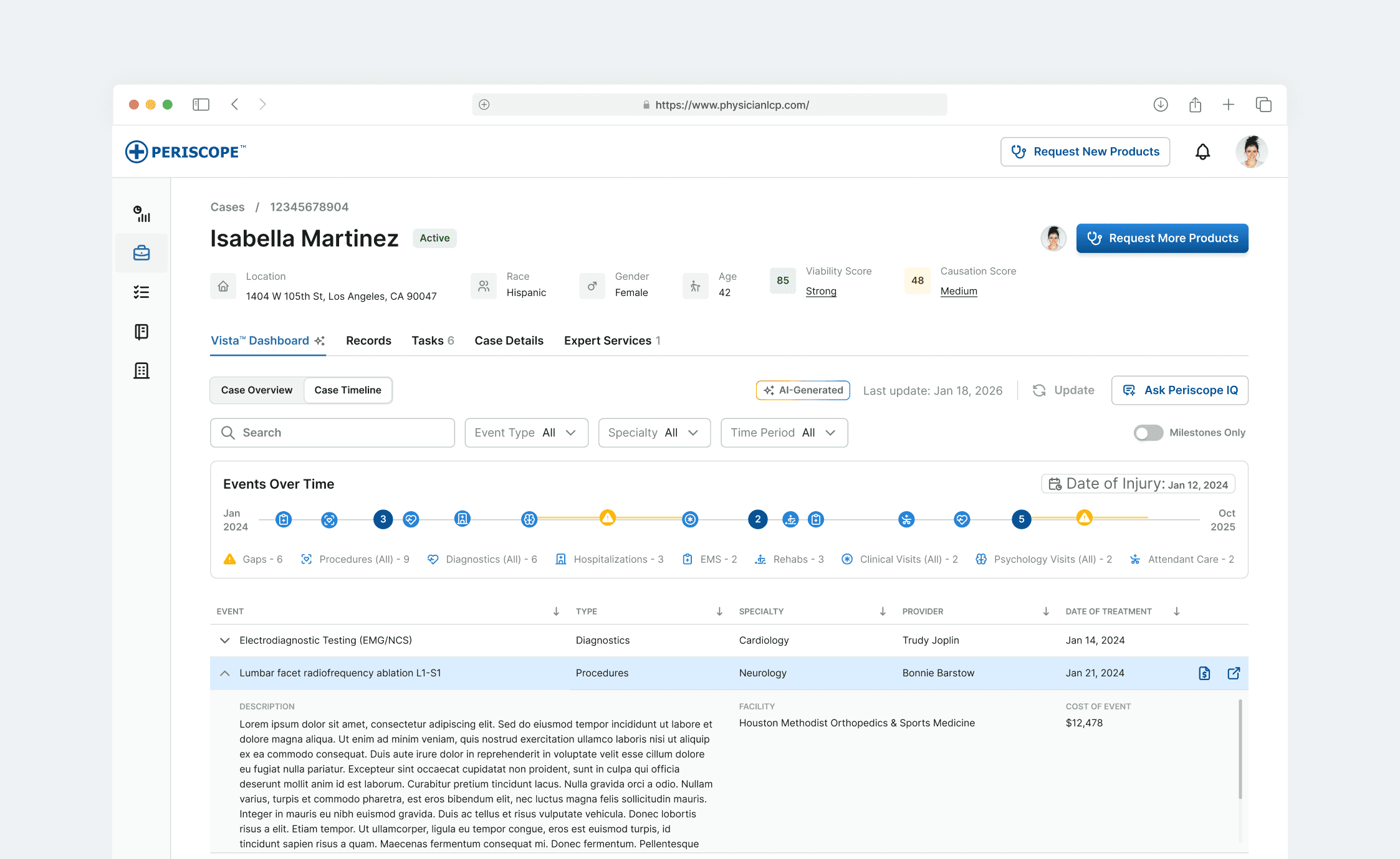
Case Timeline
Understanding the details of a case often requires understanding the details of when care occurred over time.
The Case Timeline transforms unstructured medical records into a chronological view of clinical visits, diagnostics, procedures, and treatments. By visualizing care over time, users can quickly identify patterns, delays, and gaps in care that may otherwise be buried in documentation.
This module organizes hundreds or thousands of records into an easy-to-parse timeline, enabling faster comprehension and more informed decision-making.
Intelligence Dashboard
Periscope IQ
Periscope IQ allows users to ask targeted questions across an entire medical record set using a natural language chatbot.
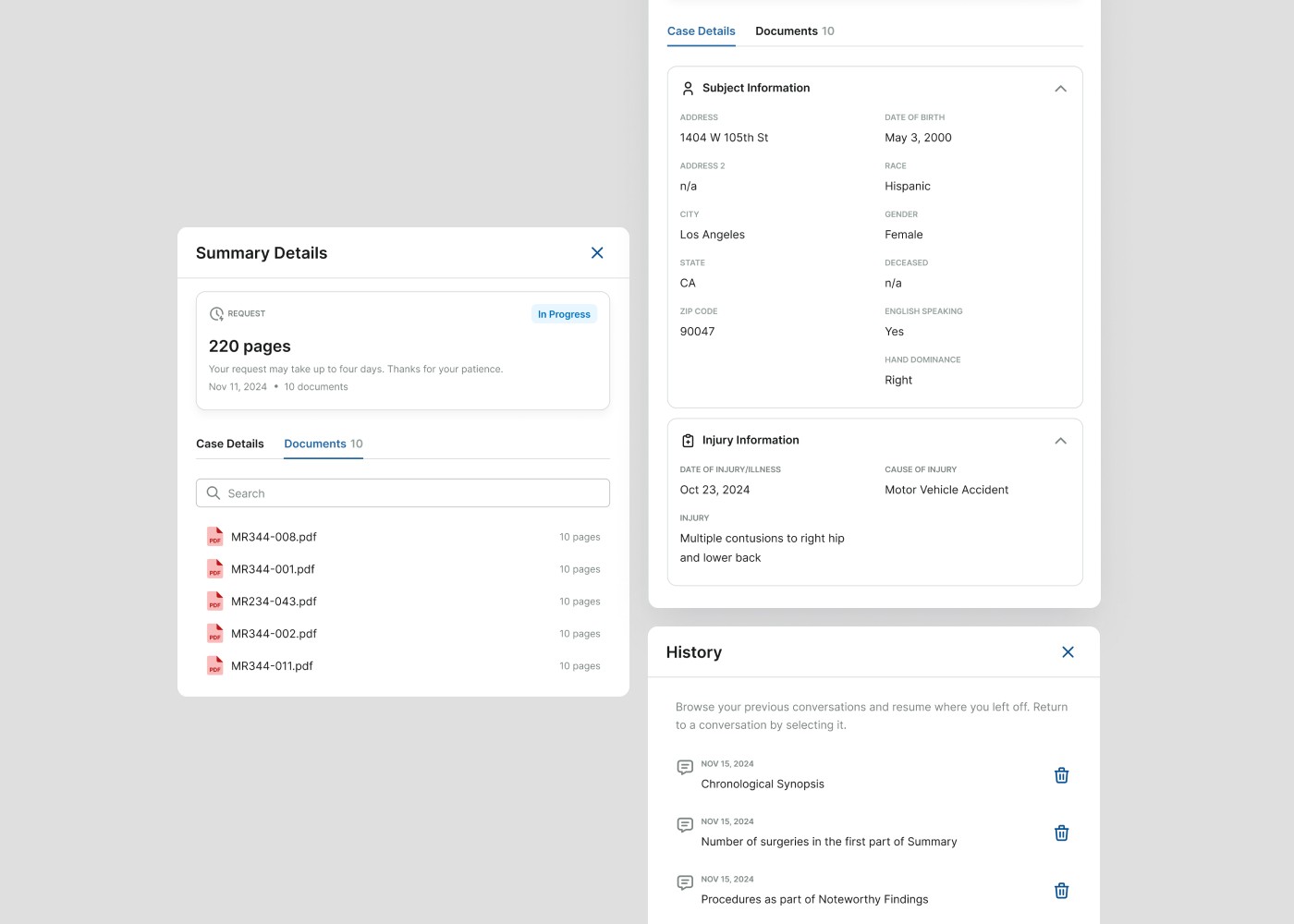
Rather than relying on keyword search, users can explore prior injuries, treatment history, or reported symptoms and receive structured responses grounded in the underlying records. Each response maintains traceability to source documents, supporting validation and professional review. Users are also presented with a set of common prompts for easier access to the key case information. Prompt suggestions vary over time as the conversation proceeds.
This transforms AI from a passive summarization tool into an active investigation aid that can be used throughout the lifecycle of a case.