Case Study

Re-Engineering Software Delivery with AI at Roko Labs

Recently, our team at Roko Labs introduced a strategic, structured, and project-level assessment to understand how AI-driven development practices were impacting software delivery across our engineering teams. The objective of this assessment was not simply to increase AI usage, but to standardize AI-enabled workflows and translate individual productivity gains into measurable, delivery-level outcomes, including quality, throughput, and predictability—across complex, enterprise-grade delivery environments

Case Study

Re-Engineering Software Delivery with AI at Roko Labs

Recently, our team at Roko Labs introduced a strategic, structured, and project-level assessment to understand how AI-driven development practices were impacting software delivery across our engineering teams. The objective of this assessment was not simply to increase AI usage, but to standardize AI-enabled workflows and translate individual productivity gains into measurable, delivery-level outcomes, including quality, throughput, and predictability—across complex, enterprise-grade delivery environments

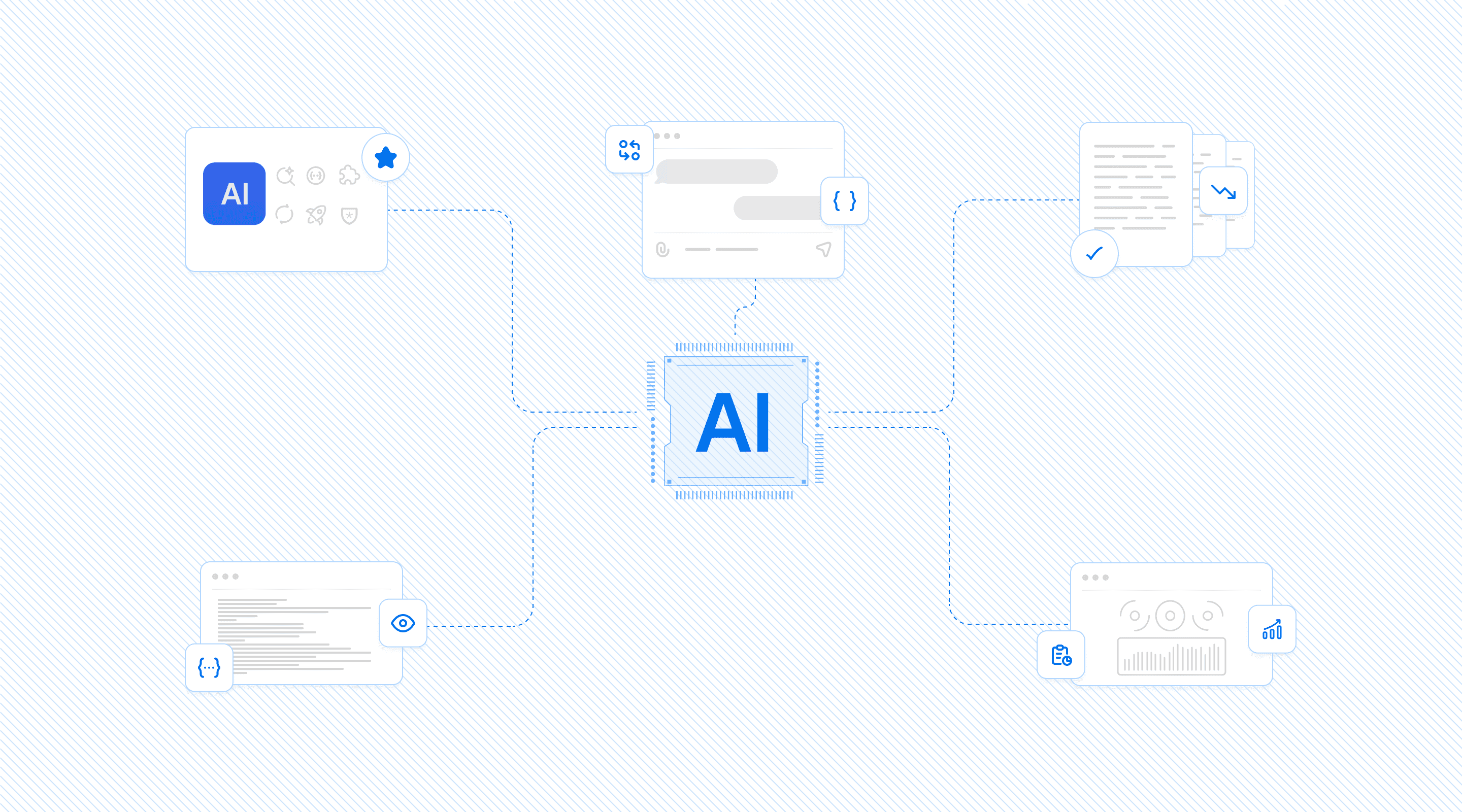
Illustration of an AI‑powered software delivery workflow showing a central AI engine connected to code, testing, documentation, validation, and system analysis pipelines, representing reusable AI workflows and automation across engineering teams.

Client

Internal-facing project

Industry

Software Consulting

Services

Development Services AI Optimization

Project Duration

3 Months

Illustration of an AI‑powered software delivery workflow showing a central AI engine connected to code, testing, documentation, validation, and system analysis pipelines, representing reusable AI workflows and automation across engineering teams.

Client

Internal-facing project

Industry

Software Consulting

Services

Development Services AI Optimization

Project Duration

3 Months

Illustration of an AI‑powered software delivery workflow showing a central AI engine connected to code, testing, documentation, validation, and system analysis pipelines, representing reusable AI workflows and automation across engineering teams.

Client

Internal-facing project

Industry

Software Consulting

Services

Development Services AI Optimization

Project Duration

3 Months

Challenge

As AI adoption in software development has accelerated and become the norm, Roko Labs recognized a recurring pattern seen across both internal teams and enterprise clients operating in modern engineering environments: AI was improving individual productivity in areas such as coding, debugging, and documentation. However, improvements in delivery quality, velocity, and predictability remained inconsistent. This gap was especially pronounced in complex, multi-team delivery environments, where outcomes are shaped not only by individual execution, but by system-wide factors including: • Code review and approval processes • Testing and quality validation workflows • CI/CD pipeline performance and reliability • Cross-team and cross-function coordination • System architecture, technical debt, and legacy constraints Initial analysis indicated that while AI was accelerating discrete tasks, broader delivery systems were not structured to capture those gains at the enterprise level. Productivity improvements were frequently absorbed by downstream bottlenecks rather than translating into faster or more predictable delivery outcomes.

Observation

Roko Labs conducted a structured, organization-wide assessment of our development organization to understand how AI was being used across real-world delivery workflows. The assessment examined: • Frequency and type of AI usage across teams • Integration of AI into engineering, product, and operational workflows • Impact on productivity, delivery speed, and quality outcomes • Prompting patterns, tooling choices, and usage variability • Validation practices, trust boundaries, and risk mitigation Several consistent patterns emerged: • AI was already embedded in day-to-day work across teams • Individual productivity gains were consistently reported • Usage patterns were highly variable and largely individualized • Delivery-level improvements remained inconsistent Further analysis showed that gains were being absorbed by systemic constraints, including code review latency, testing bottlenecks, CI/CD inefficiencies, and coordination overhead.

Challenge

As AI adoption in software development has accelerated and become the norm, Roko Labs recognized a recurring pattern seen across both internal teams and enterprise clients operating in modern engineering environments: AI was improving individual productivity in areas such as coding, debugging, and documentation. However, improvements in delivery quality, velocity, and predictability remained inconsistent. This gap was especially pronounced in complex, multi-team delivery environments, where outcomes are shaped not only by individual execution, but by system-wide factors including: • Code review and approval processes • Testing and quality validation workflows • CI/CD pipeline performance and reliability • Cross-team and cross-function coordination • System architecture, technical debt, and legacy constraints Initial analysis indicated that while AI was accelerating discrete tasks, broader delivery systems were not structured to capture those gains at the enterprise level. Productivity improvements were frequently absorbed by downstream bottlenecks rather than translating into faster or more predictable delivery outcomes.

Observation

Roko Labs conducted a structured, organization-wide assessment of our development organization to understand how AI was being used across real-world delivery workflows. The assessment examined: • Frequency and type of AI usage across teams • Integration of AI into engineering, product, and operational workflows • Impact on productivity, delivery speed, and quality outcomes • Prompting patterns, tooling choices, and usage variability • Validation practices, trust boundaries, and risk mitigation Several consistent patterns emerged: • AI was already embedded in day-to-day work across teams • Individual productivity gains were consistently reported • Usage patterns were highly variable and largely individualized • Delivery-level improvements remained inconsistent Further analysis showed that gains were being absorbed by systemic constraints, including code review latency, testing bottlenecks, CI/CD inefficiencies, and coordination overhead.

Challenge

As AI adoption in software development has accelerated and become the norm, Roko Labs recognized a recurring pattern seen across both internal teams and enterprise clients operating in modern engineering environments: AI was improving individual productivity in areas such as coding, debugging, and documentation. However, improvements in delivery quality, velocity, and predictability remained inconsistent. This gap was especially pronounced in complex, multi-team delivery environments, where outcomes are shaped not only by individual execution, but by system-wide factors including: • Code review and approval processes • Testing and quality validation workflows • CI/CD pipeline performance and reliability • Cross-team and cross-function coordination • System architecture, technical debt, and legacy constraints Initial analysis indicated that while AI was accelerating discrete tasks, broader delivery systems were not structured to capture those gains at the enterprise level. Productivity improvements were frequently absorbed by downstream bottlenecks rather than translating into faster or more predictable delivery outcomes.

Observation

Roko Labs conducted a structured, organization-wide assessment of our development organization to understand how AI was being used across real-world delivery workflows. The assessment examined: • Frequency and type of AI usage across teams • Integration of AI into engineering, product, and operational workflows • Impact on productivity, delivery speed, and quality outcomes • Prompting patterns, tooling choices, and usage variability • Validation practices, trust boundaries, and risk mitigation Several consistent patterns emerged: • AI was already embedded in day-to-day work across teams • Individual productivity gains were consistently reported • Usage patterns were highly variable and largely individualized • Delivery-level improvements remained inconsistent Further analysis showed that gains were being absorbed by systemic constraints, including code review latency, testing bottlenecks, CI/CD inefficiencies, and coordination overhead.

Approach

Building on this baseline, Roko Labs' team conducted a cross-functional assessment of AI usage spanning engineering, product, and business functions. The assessment focused on: • How AI was applied across the full software delivery lifecycle • Where AI accelerated work versus where delivery systems constrained impact • Opportunities to standardize, operationalize, and scale effective AI usage • Alignment between AI-enabled work and enterprise delivery goals This analysis established a system-level view of AI adoption, highlighting where ad hoc use limited impact and where structured, reusable workflows could meaningfully improve delivery performance.

Assessment Protocol

The Roko Labs leadership team implemented a coordinated set of changes designed to integrate AI into the delivery pipeline as a first-class, system-level capability, rather than an individual productivity tool. Key elements included: • Standardization of AI-assisted workflows across internal and client-facing tools • Development of shared, reusable prompt libraries aligned with delivery needs • Creation of repeatable AI-supported workflows for engineering and product teams • Documentation of effective prompting, validation, and usage patterns • Expanded application of AI across testing, validation, and technical documentation • Increased visibility into debugging, investigation, and system-level analysis • Identification of high-performing AI workflows and conversion into reusable playbooks • Scaled deployment of proven practices across teams and projects These changes were implemented in parallel to ensure that individual productivity improvements could reliably translate into delivery-level outcomes—a core requirement for enterprise software organizations operating at scale.

Outcomes

Following this initiative, AI usage at Roko Labs evolved from primarily individual, tool-driven activity into a more integrated component of the software delivery system. Observed changes included: • Greater consistency in how AI was applied across teams and projects • Increased visibility into previously untracked engineering and delivery work • Improved alignment between individual productivity and delivery outcomes • Reduced impact of common delivery bottlenecks • Broader application of AI across multiple stages of the software lifecycle The result is a delivery model in which AI contributes not only to task-level efficiency, but to the overall structure, reliability, and performance of enterprise software delivery, supporting predictable outcomes in complex engineering environments.
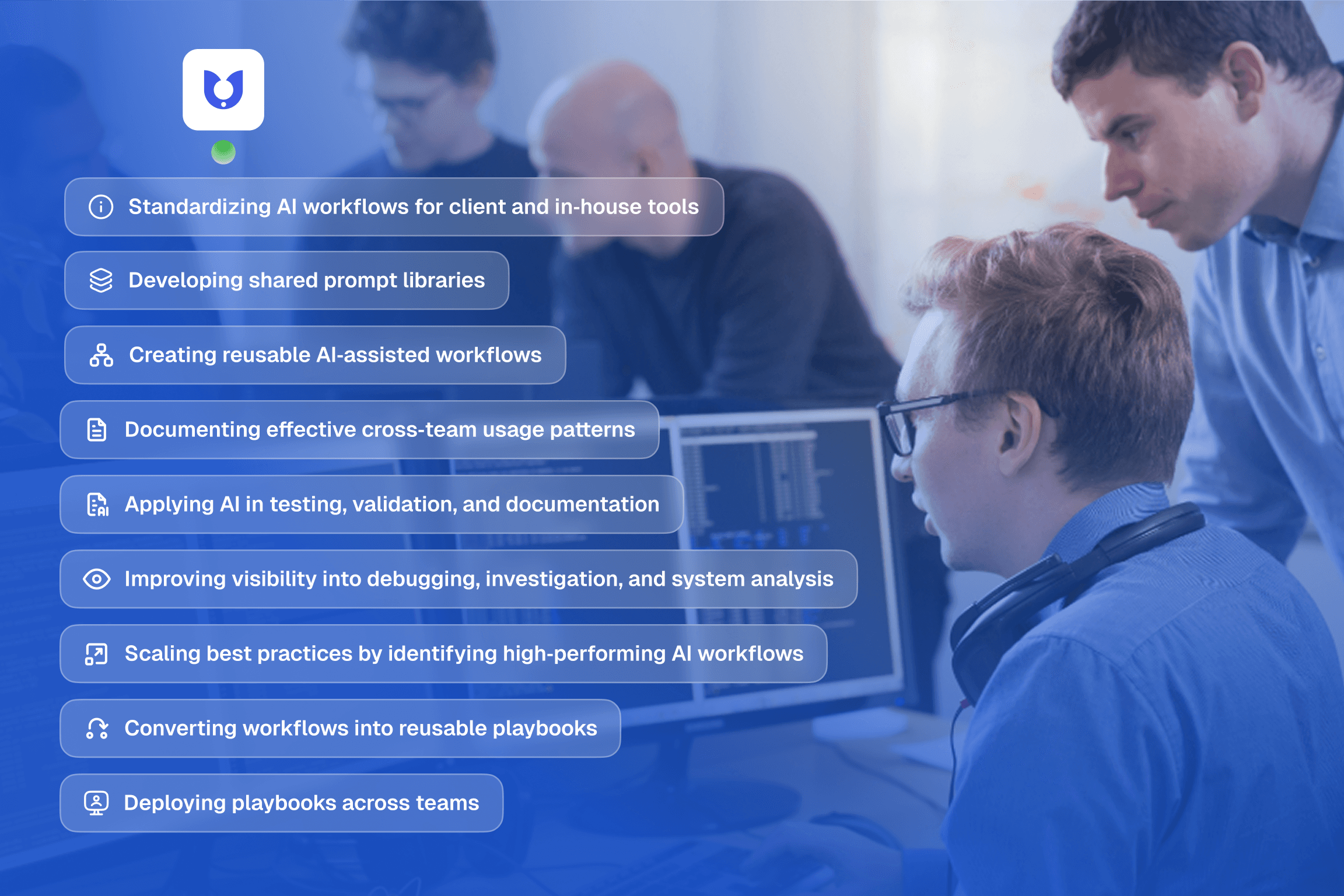
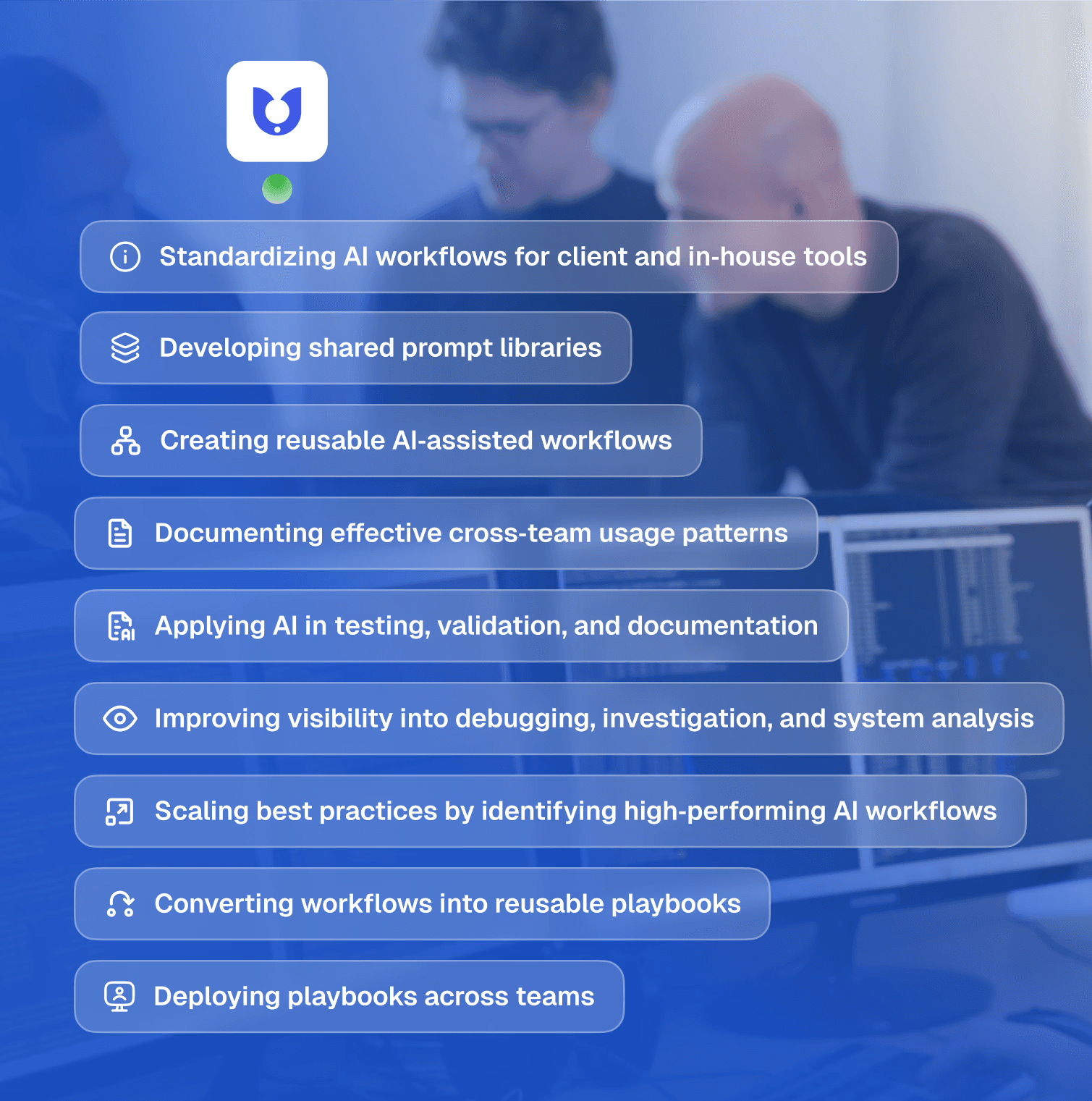
Engineering team collaborating at a computer with an overlay illustrating standardized AI workflows, shared prompt libraries, reusable AI‑assisted workflows, testing, validation, debugging, and deployment of AI playbooks across software development teams.